
Three Lessons I Learned from Exhibiting Artful Objects
Three Lessons I Learned from Exhibiting Artful Objects
Making the Object Is Only Half the Story
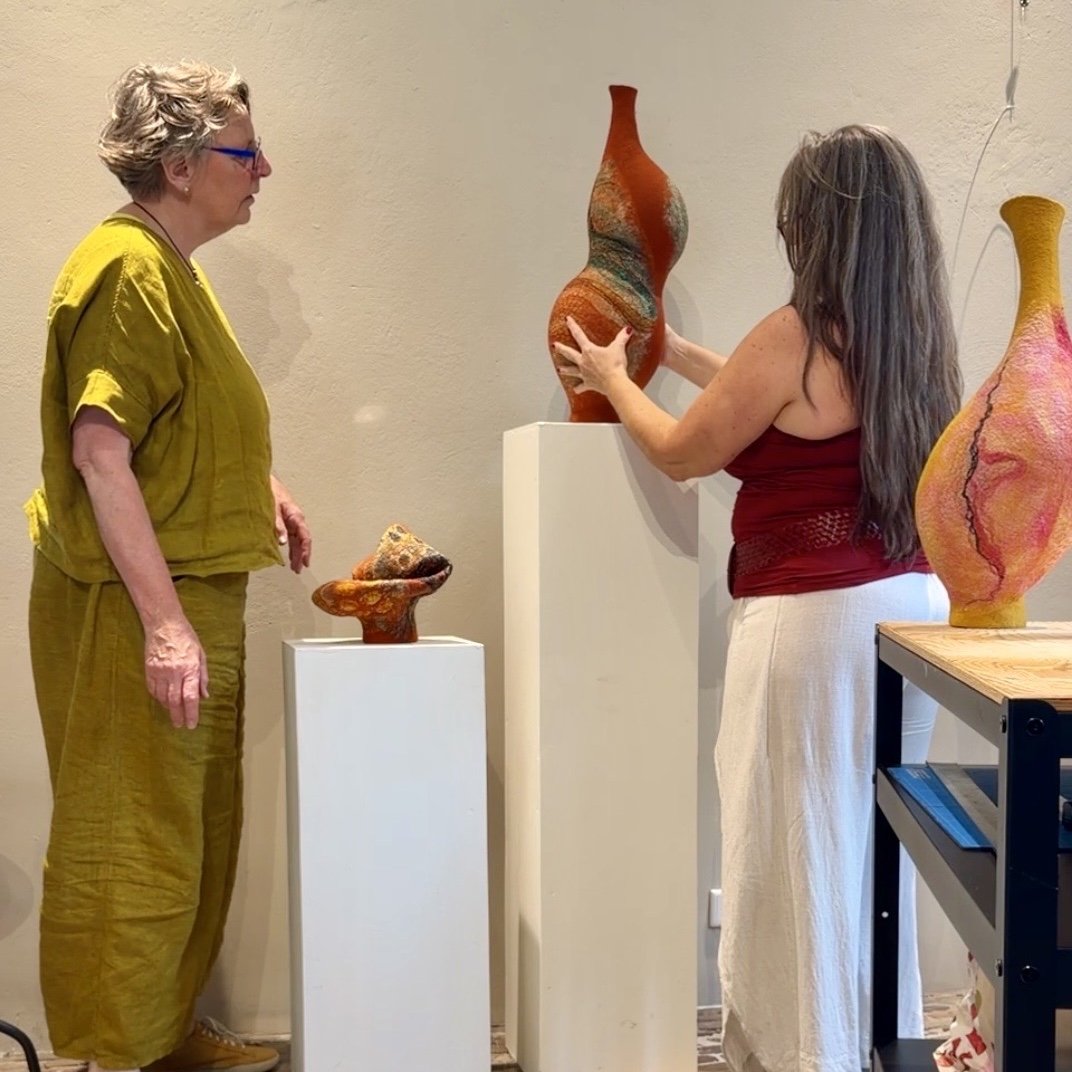
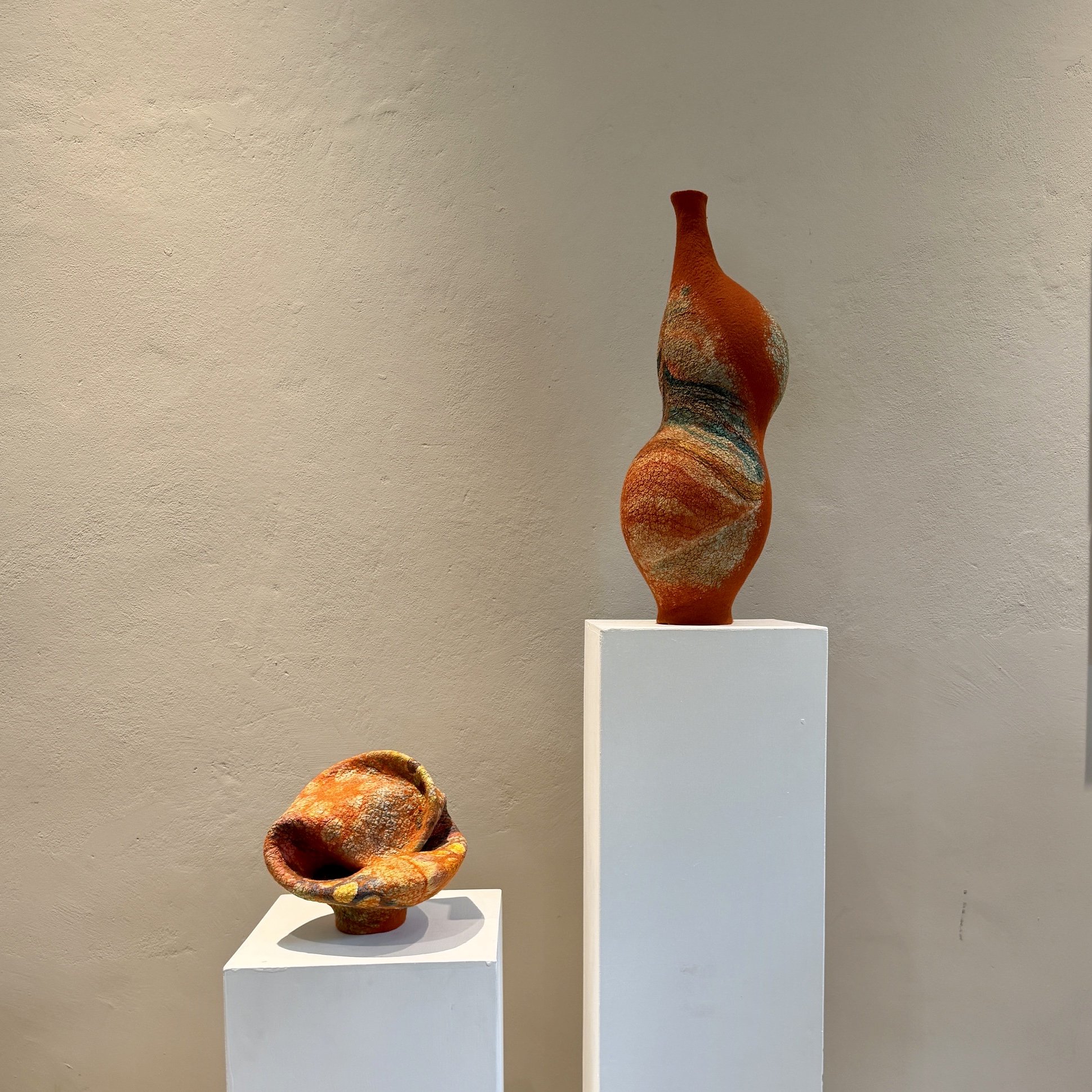
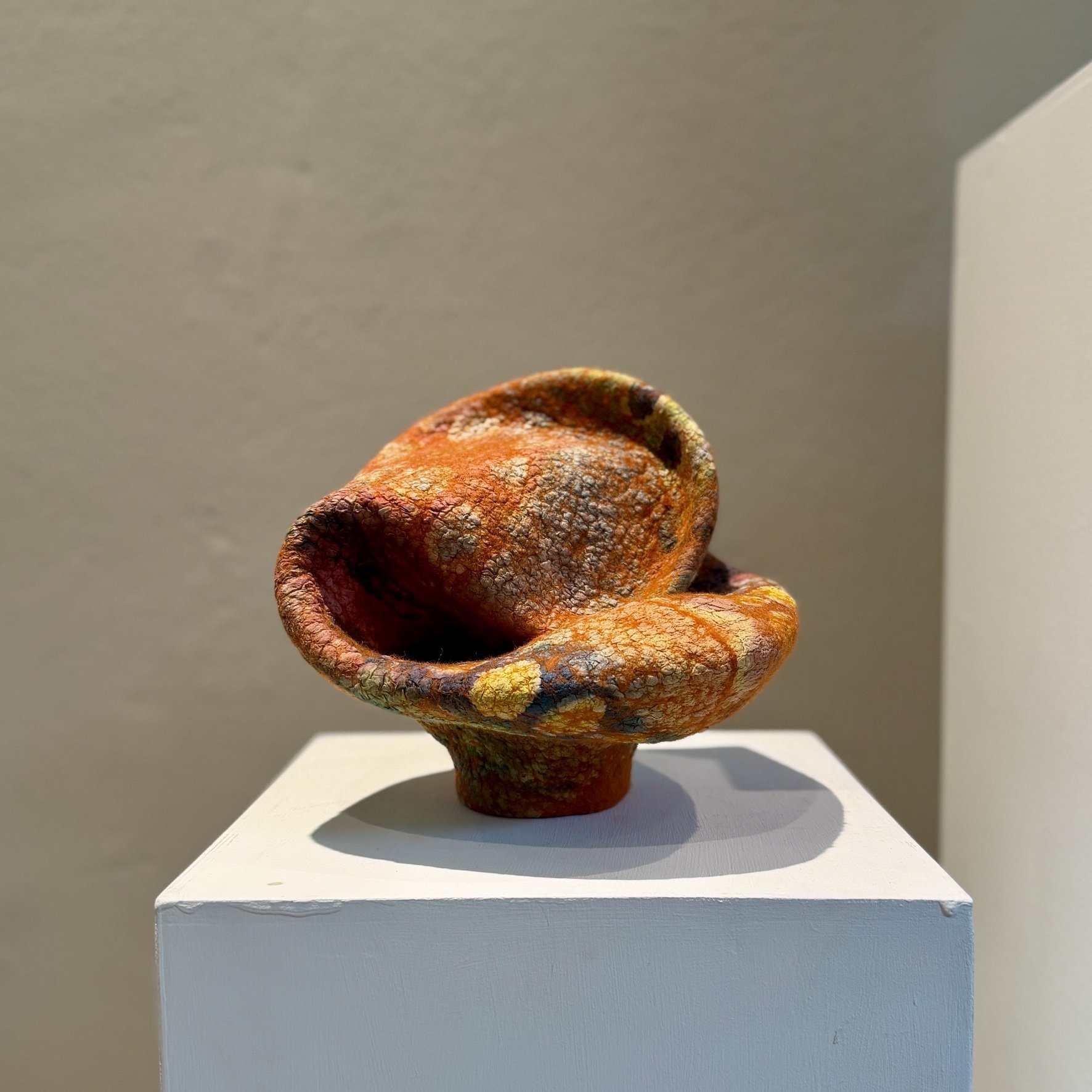
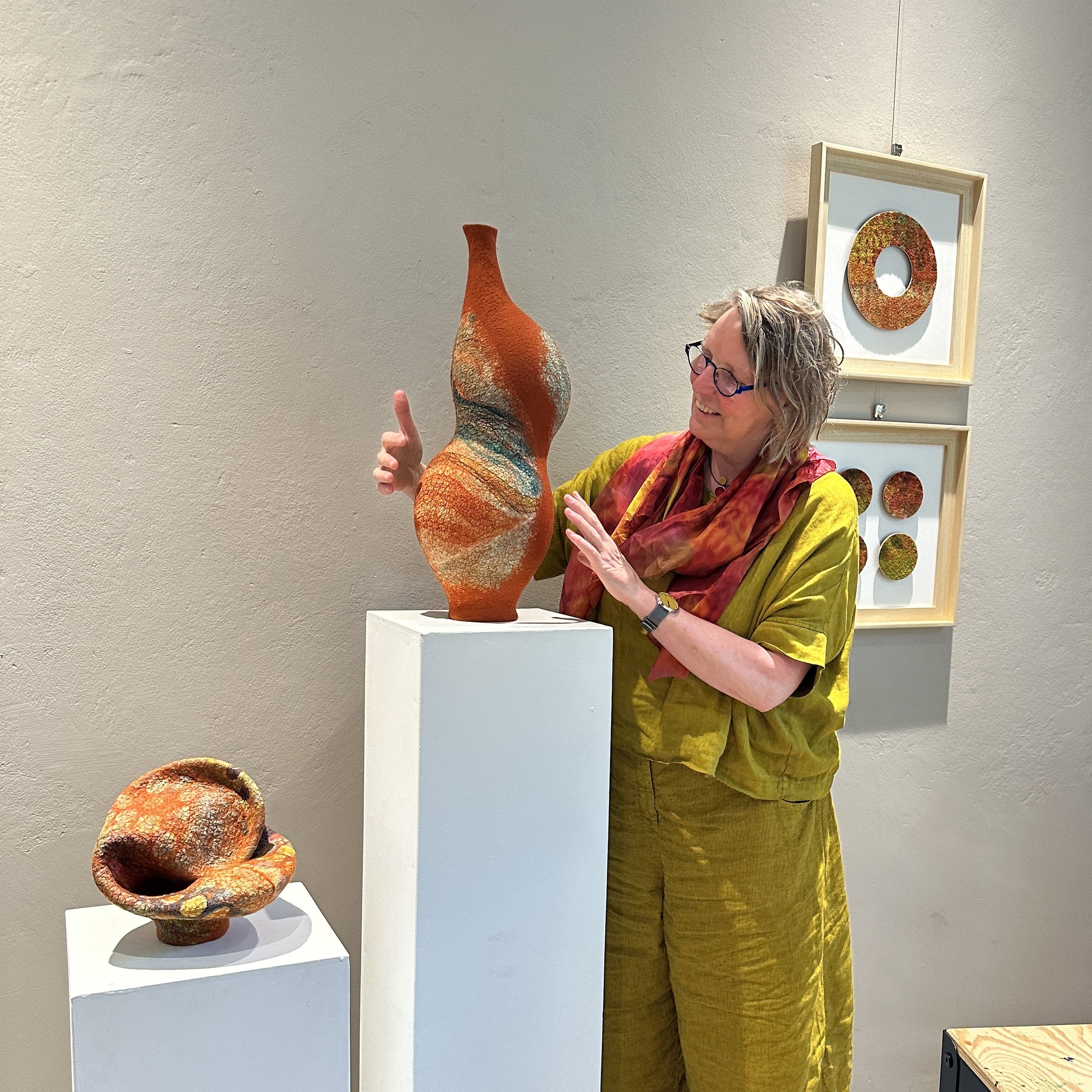
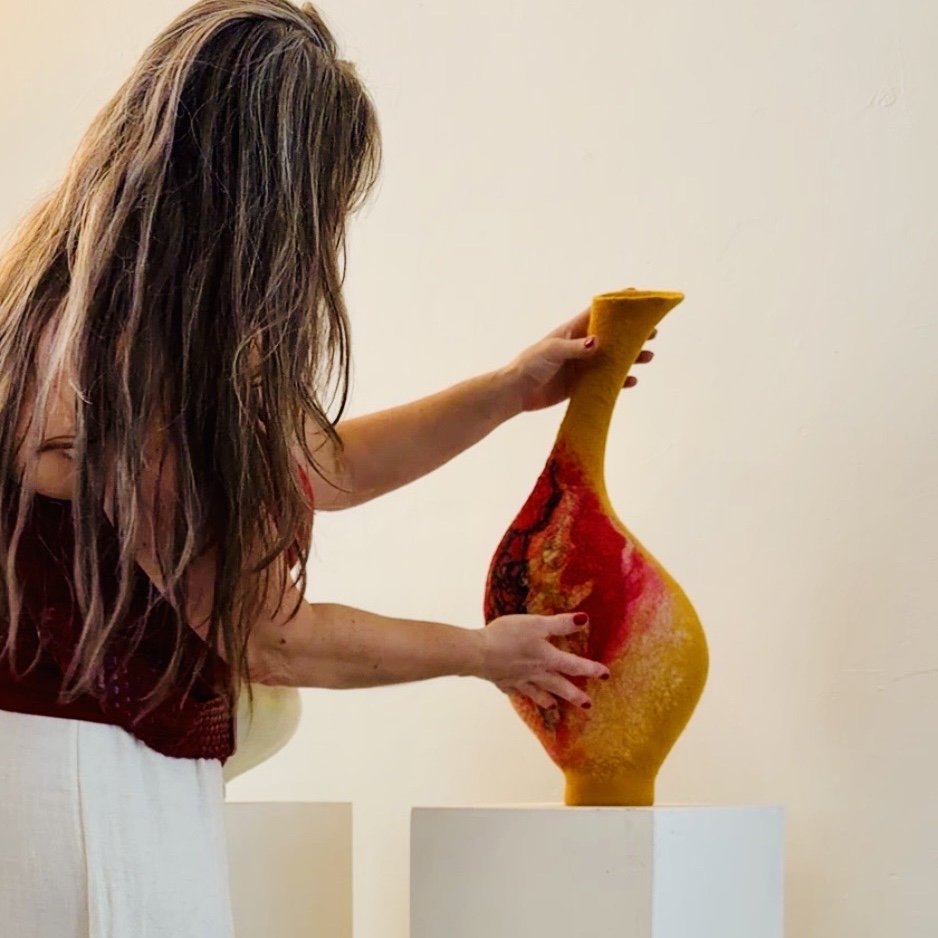
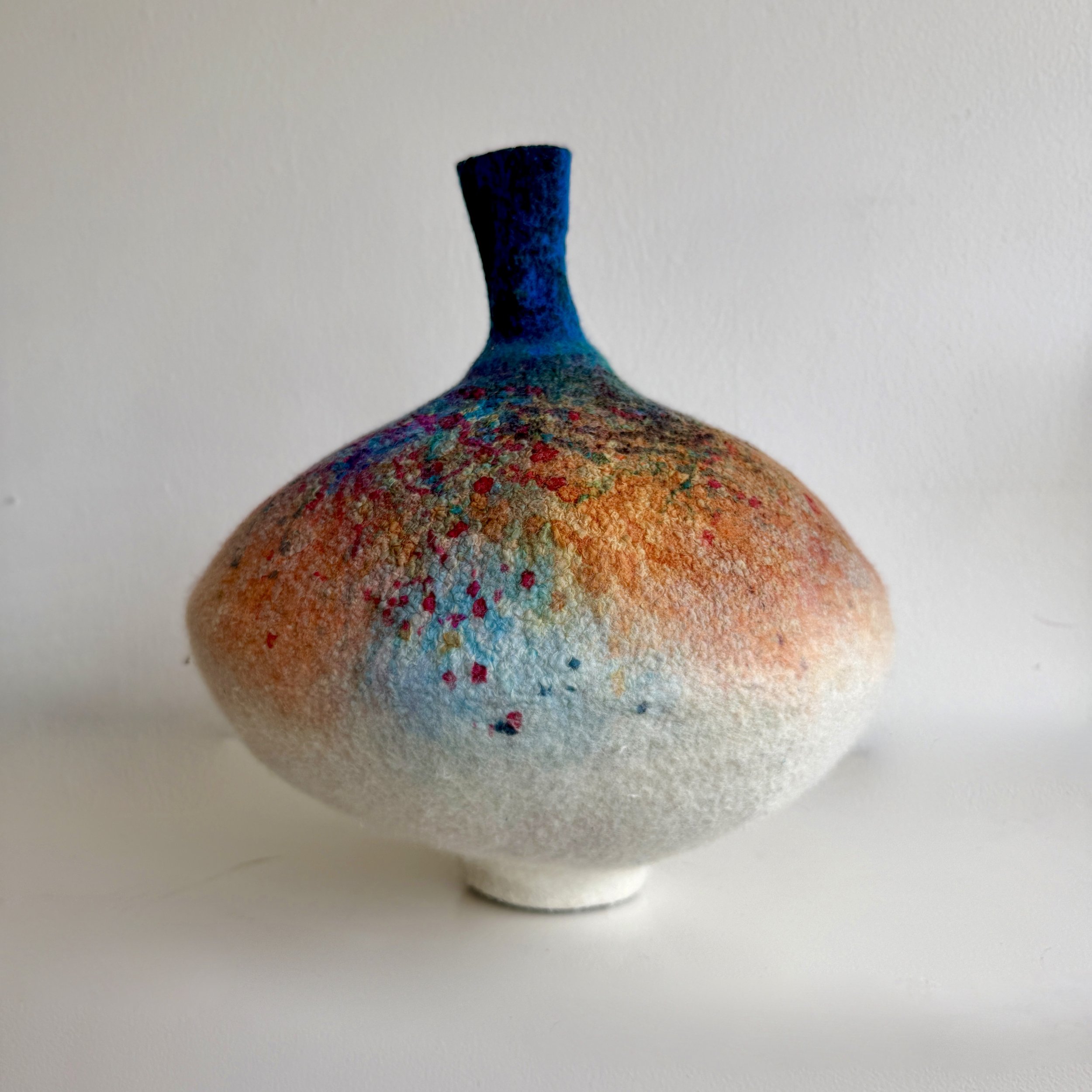
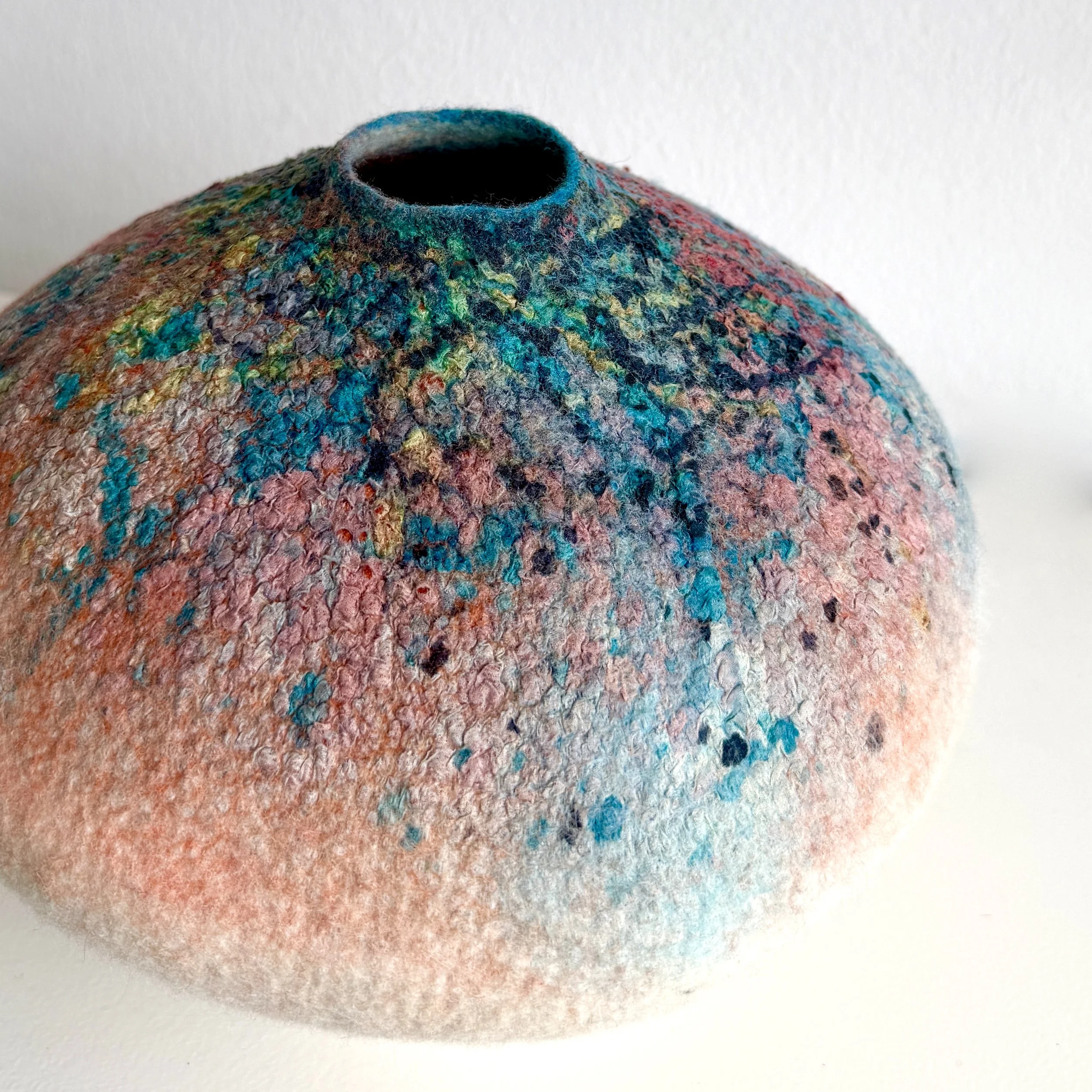
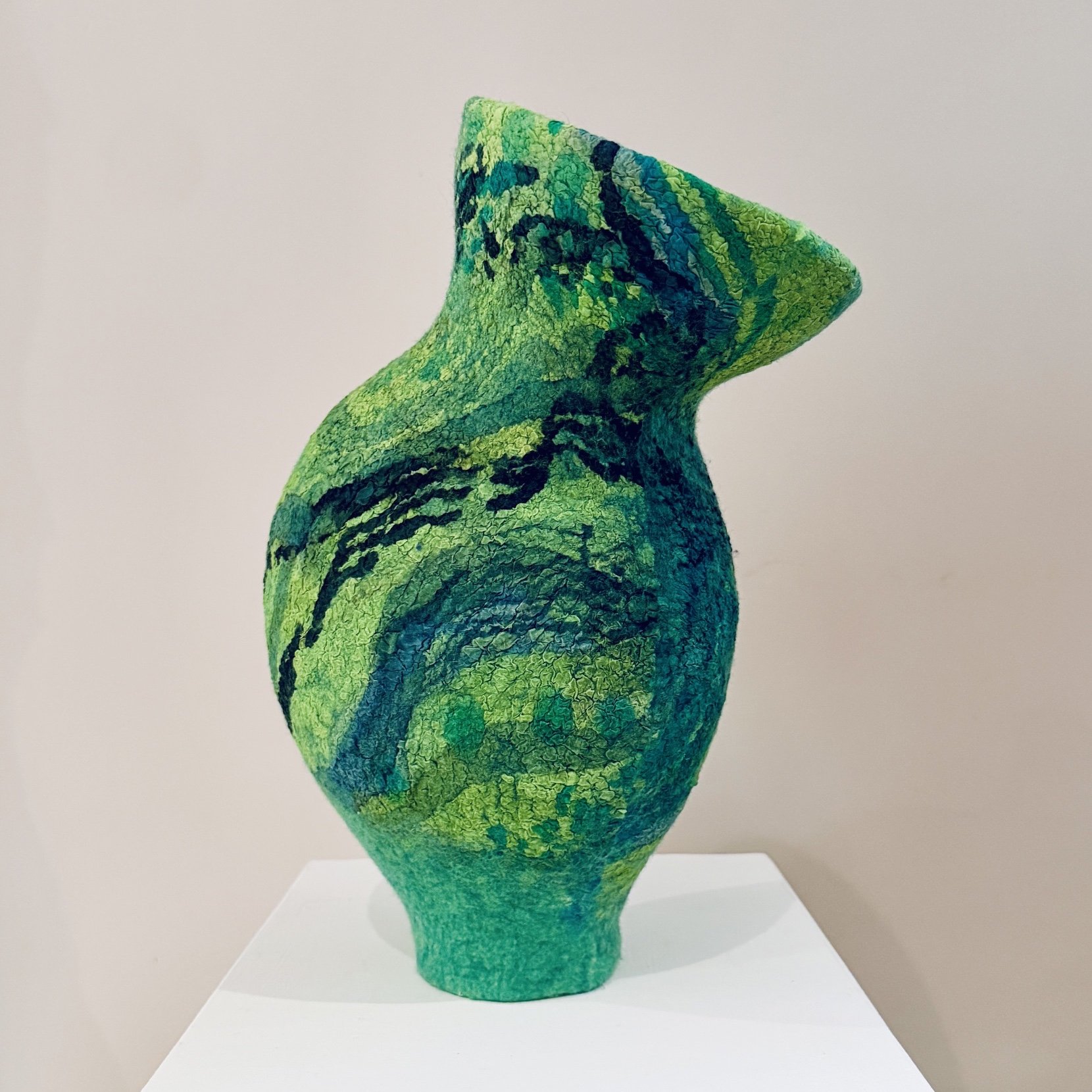
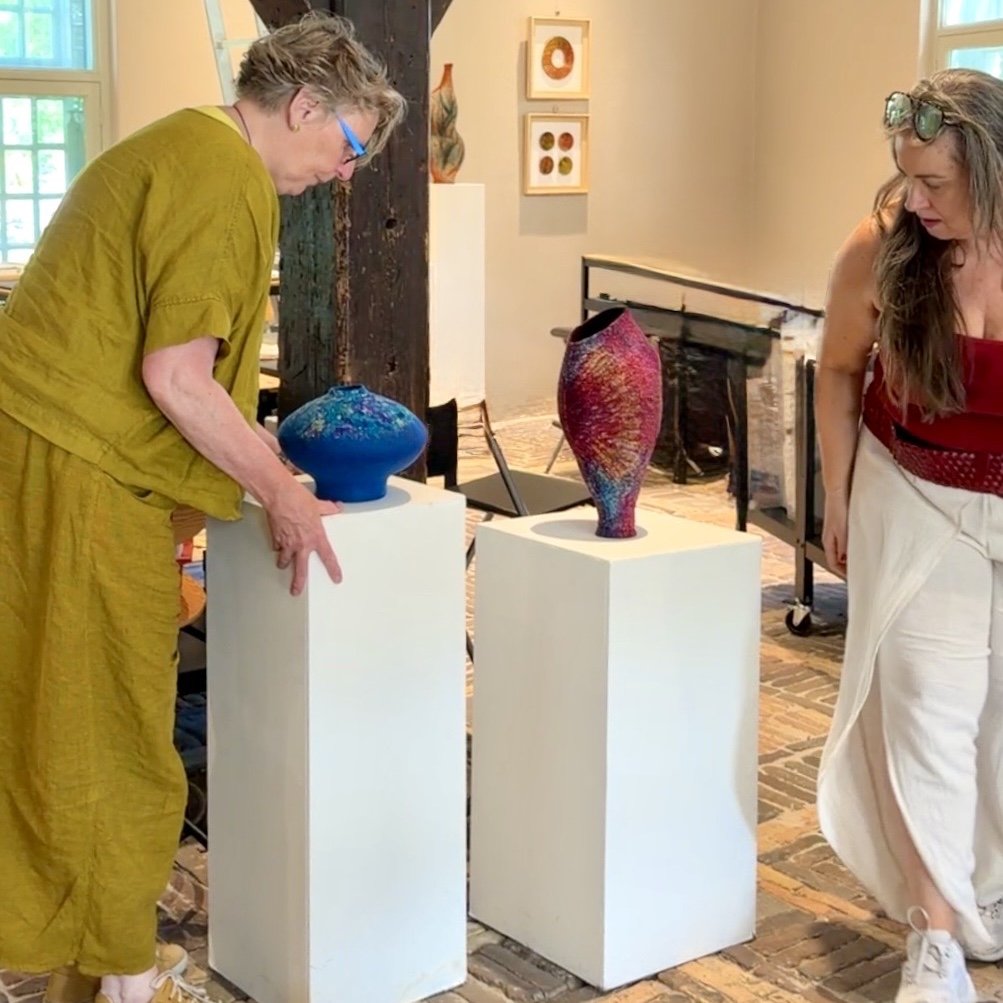
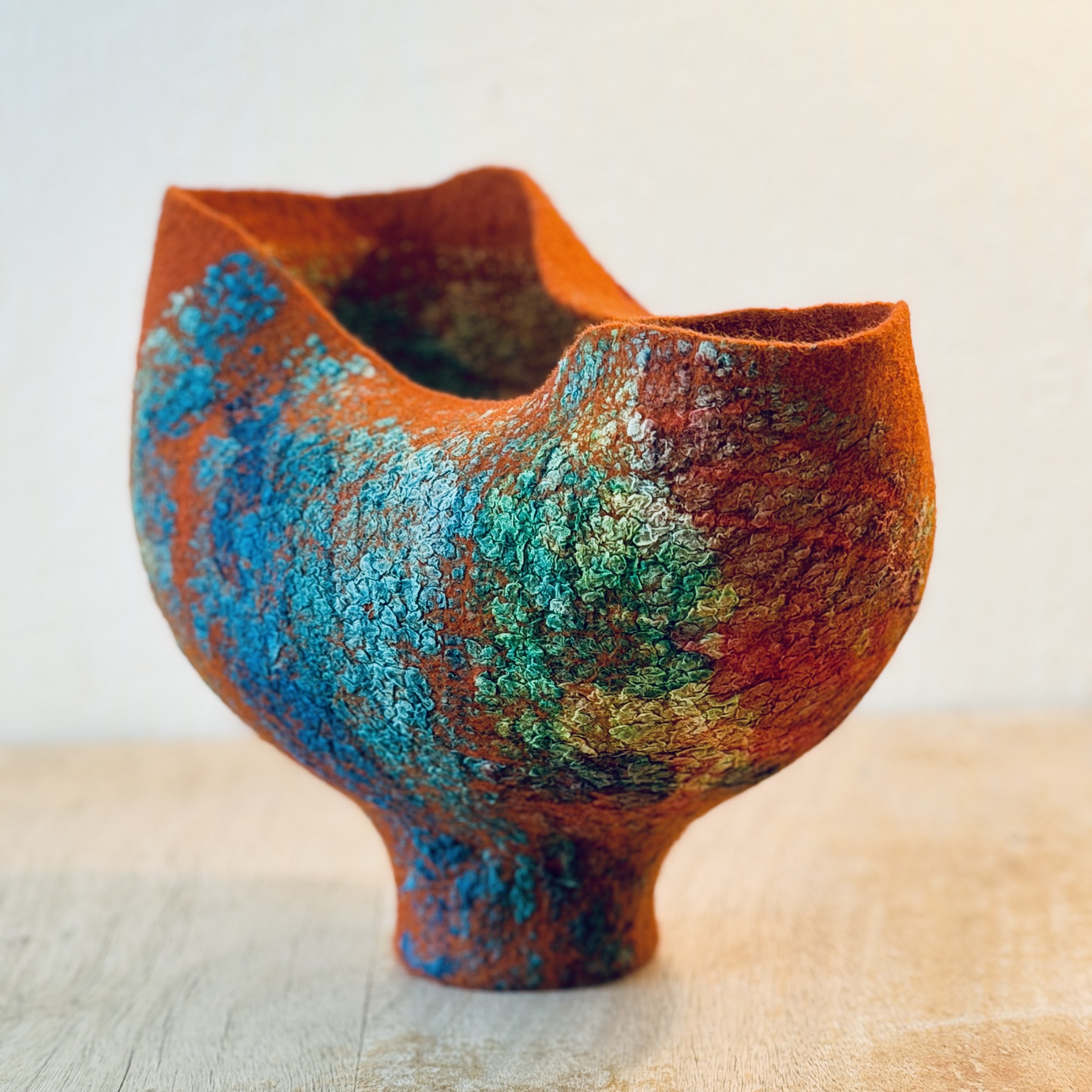
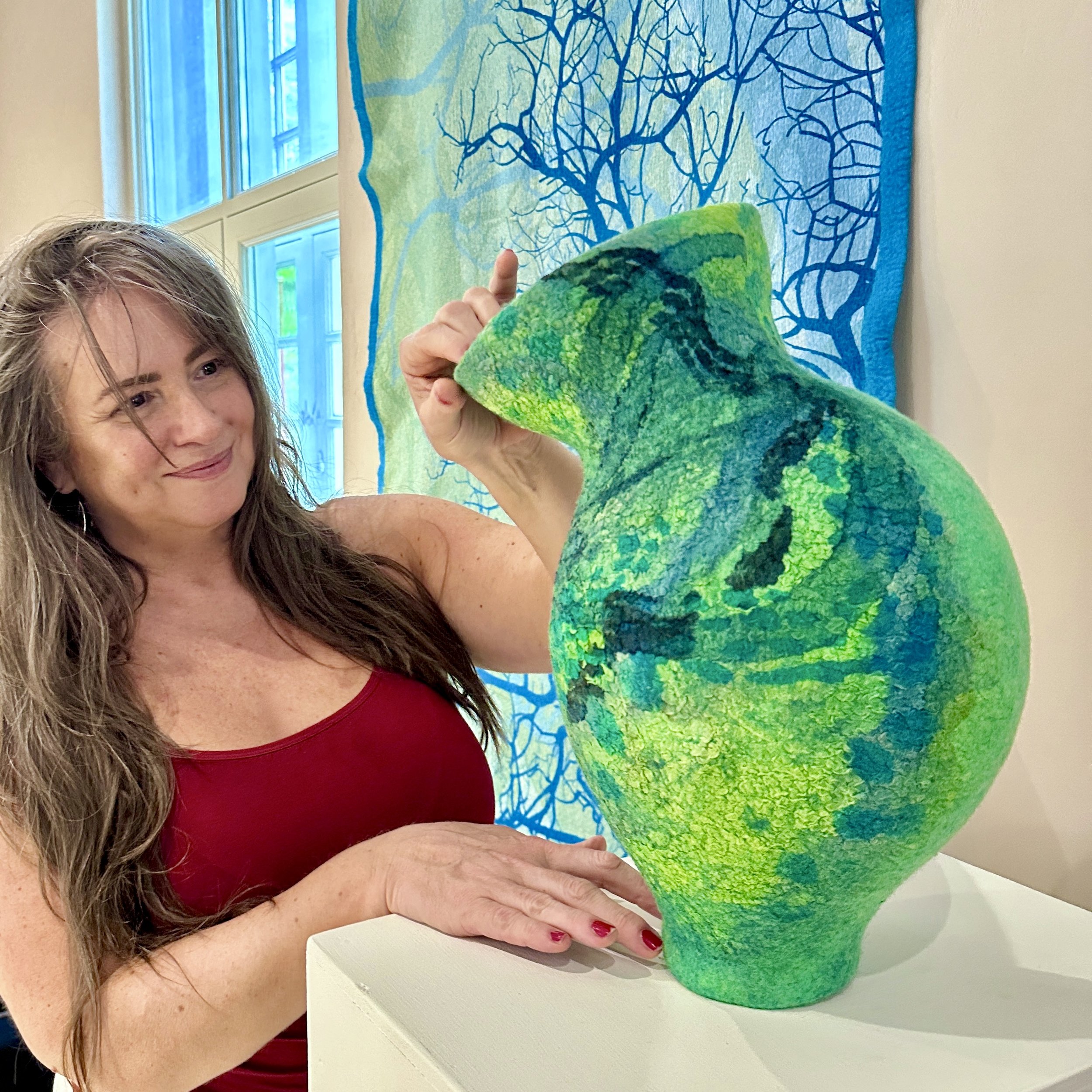
Right now, Ellen Bakker (Colours of Ellen) and I are exhibiting our collaborative collection Artful Objects: a series of sculptural felt vessels in which I incorporate Ellen’s hand-painted silk. In the exhibition De Kracht van Zacht (Power in Softness), we explore the poetic beauty of our materials and how powerful their expression becomes when they’re brought together. The exhibition is showing at De Katoendrukkerij in the historic Dutch city of Amersfoort.
Seeing these sculptural pieces outside our studios has been an amazing experience. Not only because we are excited to share it with the world, but also because they serve an important purpose.
These objects are made to be experienced by visitors. They are meant to make people pause and look closely. The surfaces, textures, and colours surprise and puzzle viewers, allowing them to experience the unique expression created by wool and silk. They are meant to raise curiosity and question our expectations about materials.
But all this is possible only if the work is presented in a way that leaves room for curiosity—if, when viewers encounter the objects, they are given the space to tell their story.
So I would like to take you behind the scenes of our exhibition and show you another fascinating part of the process: everything that happens after the objects leave the studio and before they are exhibited
Setting up an exhibition is a creative process in itself
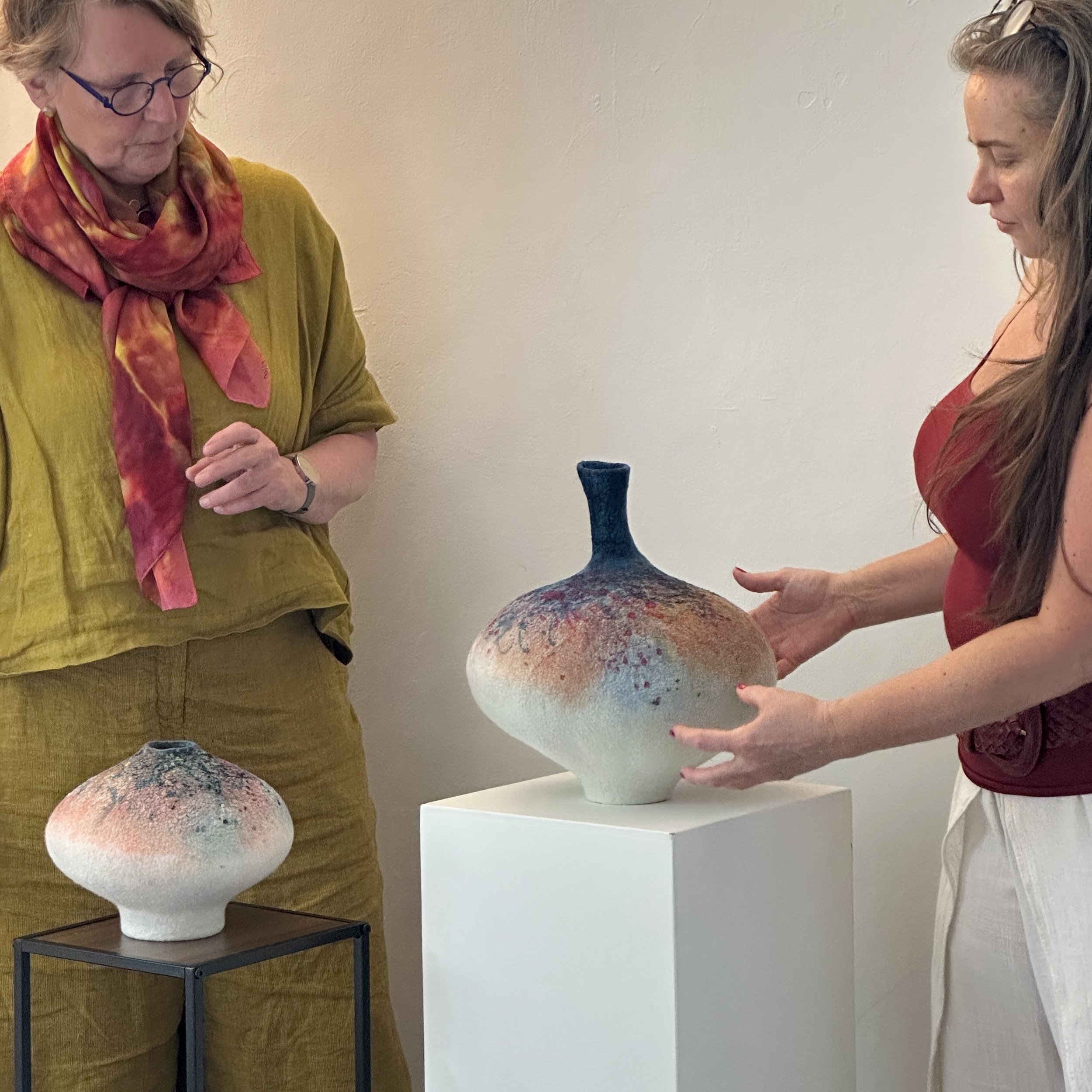
Deciding where each piece belongs, how much space it needs, how it relates to the objects around it, how the light falls across its surface…every small decision influences how the work is experienced. The exhibition doesn't simply display the work; it becomes part of it.
If you get it right, something remarkable happens. You begin to see your own work differently. New relationships appear, a story emerges, and the collection starts to speak with one voice.
Throughout this process, I learned a great deal, and I'd love to share some of those lessons with you.
Whether you're preparing an exhibition, an open studio, a market stand, or simply photographing your work, I hope these ideas will help you present your creations with greater confidence and intention.
Lesson 1: Bring more. Show less.
When preparing an exhibition or display, always bring more work than you expect to show.
Then be ruthless. Become the curator of your own work.
Choose only the pieces that best express your vision and craftsmanship. Power rarely comes from quantity. It comes from clarity.
Lesson 2: A Collection Tells a Stronger Story Than Individual Pieces
Think carefully about the conversation between your objects. The relationship they have with each other.
Place together pieces that have something to say to one another. Perhaps they explore the same theme, share a similar technique, echo a colour palette, or simply belong to the same visual language. When the relationship between the pieces is intentional, each object strengthens the others.
A thoughtfully curated collection often has a greater impact than a series of unrelated masterpieces. Instead of asking, "Is this my best piece?" ask, "Does this piece help tell the story I want to tell?"
Individual works may be beautiful on their own, but together they can become something larger: a coherent body of work with a clear artistic voice.
Lesson 3: Space is part of the artwork.
When we look at an object, we naturally tend to focus on the space it occupies. We see how its shape expands and contracts, how it reaches into the space around it.
But things become much more interesting (especially with hollow sculptural forms) if we look at space differently. What about the space enclosed by the object?
This space is not separate from the space outside. It is in direct contact with it, it is a continuation of it.
I became very aware of this while exhibiting the Artful Objects, and I found a way of visualising it that helped me greatly when arranging the exhibition.
I imagine each vessel as being filled with space that continuously spills out through its opening. This invisible "spillage" extends into the room, enveloping the object and creating a natural boundary around it. In doing so, it can make the object feel larger, stronger, and more present. The farther this "spillage" reaches, the more space the object seems to occupy.
Now imagine placing another vessel nearby.
If two vessels are both spilling their interior space into the room with great energy, they may begin to compete for the same breathing space. Instead of strengthening one another, they can feel as if they are fighting for air.
So when you arrange your work, don't only look at the objects themselves. Look at the spaces they create: both around them and within them.
Sometimes the most important thing you can give an object is enough space to breathe. Empty space gives form room to speak.
Visit Artful Objects
The exhibition can be visited until 20 September 2026.
Location
De Volmolen
Plantsoen Noord 2
3811 GH Amersfoort
De Katoendrukkerij
+31 (0)6 12526099
info@dekatoendrukkerij.nl